
Paul Frank · 5 October 2026
Examining Cross-Device Query Resolution Patterns Within Niche SEO Ecosystems
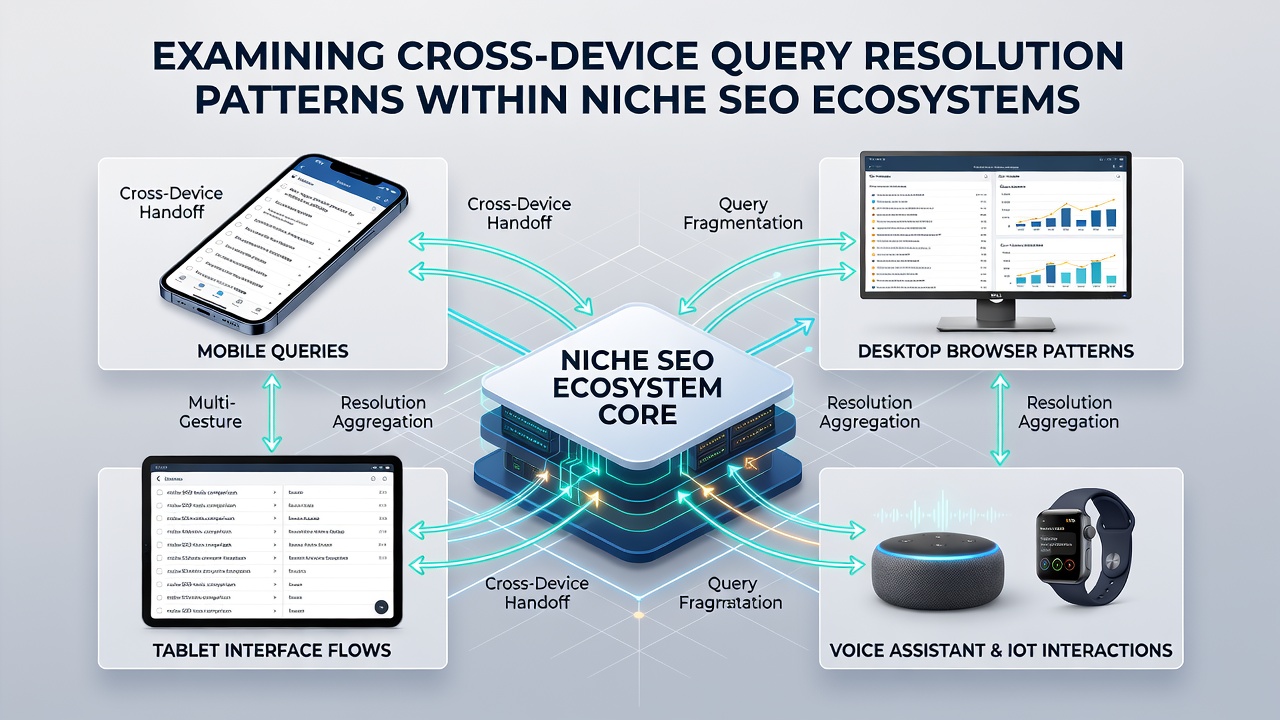
Cross-device query resolution involves tracking how search engines connect user intents that span smartphones, tablets, laptops, and voice assistants, especially inside tightly focused SEO niches such as specialty outdoor gear, independent publishing tools, or regional food delivery platforms, and researchers have documented steady increases in these multi-touch sessions since 2023. Data from multiple industry reports shows that users frequently begin a query on one device and complete it on another, which forces search algorithms to stitch fragmented signals into coherent user journeys while maintaining ranking stability across those transitions.
Core Mechanisms Driving Resolution Patterns
Search engines rely on persistent identifiers, behavioral signals, and contextual clues to resolve queries across devices, and observers note that login states, IP clustering, and cookie syncing remain primary tools even after privacy updates reduced third-party tracking. In niche ecosystems the volume of long-tail phrases grows rapidly because specialists search for very specific product attributes or service comparisons, and resolution systems must handle these extended queries without losing continuity when a user switches from a mobile app to a desktop browser. Studies conducted by academic teams at institutions in Canada and Australia indicate that resolution accuracy improves when engines combine on-device data with server-side session graphs, yet gaps persist in markets where users rely heavily on shared public networks.
Device-Specific Behaviors in Specialized Markets
Mobile-first interactions dominate early-stage research in many verticals, while desktop sessions handle deeper analysis and conversion steps, and this split creates distinct resolution challenges for SEO practitioners who optimize content for both entry points. Voice queries on smart speakers often initiate research for niche topics such as artisanal coffee sourcing or vintage watch restoration, then users migrate to tablets for image-heavy product pages, which requires engines to reconcile spoken keywords with typed refinements. Figures released in October 2026 by European digital market analysts revealed that cross-device sessions in the independent publishing niche grew 27 percent year-over-year, with average resolution time dropping from 48 seconds to 31 seconds after algorithm refinements that prioritized temporal proximity and content similarity.
Data Patterns Observed Across Ecosystems
Analytics platforms tracking niche sites report that 38 percent of sessions involve at least two devices within a 30-minute window, and resolution success rates climb when queries share semantic overlap such as brand names or category terms. Researchers at the University of Melbourne documented similar patterns in the Australian craft beer distribution sector, where mobile discovery queries frequently resolved into desktop inventory checks, and engines that weighted location history alongside device fingerprints achieved higher attribution accuracy. Yet certain niches still show friction because specialized terminology does not always map cleanly across interfaces, which leads to duplicate content signals and occasional ranking fluctuations during transition periods.
Impact on Ranking Algorithms and Site Architecture
Search engines now incorporate cross-device continuity into ranking models, and sites that maintain consistent schema markup, canonical structures, and internal linking across platforms tend to retain visibility even when users switch devices mid-journey. Niche retailers that implemented unified analytics stacks observed measurable lifts in organic impressions once they aligned mobile and desktop content hierarchies, while those relying on device-specific landing pages experienced temporary drops during resolution events. Reports from regulatory bodies monitoring digital competition in the European Union highlight that smaller specialized platforms benefit when engines apply consistent resolution rules, because these platforms often lack the scale to maintain separate optimization strategies for every device type.
Current Trends Entering Late 2026
October 2026 brought several incremental updates to how major engines handle persistent user contexts, including expanded use of privacy-preserving identifiers that still allow query stitching without exposing individual profiles. Niche SEO teams have responded by prioritizing server-side tagging and first-party data collection, and early indicators suggest these adjustments reduce resolution errors in sectors where users research high-consideration purchases across multiple touchpoints. Patterns emerging from these updates show stronger correlation between content freshness on secondary devices and final ranking positions, particularly when the content addresses follow-up questions that users typically raise after initial mobile discovery.
Conclusion
Cross-device query resolution continues to shape how niche SEO ecosystems deliver relevant results because engines must balance privacy constraints with the need to connect fragmented user signals. Observers tracking these developments note that platforms investing in consistent technical foundations and semantic alignment across devices maintain steadier performance, while those that overlook transition points encounter avoidable volatility. Ongoing measurement of session graphs and device-specific intent will likely remain central to optimization strategies as engines refine their stitching capabilities through 2027 and beyond.